
Yale Research Reveals: Gazprom and Rosneft’s Complicity in the Deportation of Ukraine’s Children
Introduction: A Shift from Isolated Cases to Systemic Evidence
The latest report by the Yale School of Public Health’s Humanitarian Research Lab introduces a critical shift in how the international community must understand the ongoing harm to Ukrainian children. It does not describe isolated incidents or fragmented cases. Instead, it presents structured, evidence-based findings that point to a coordinated system—one that combines logistics, funding, institutional alignment, and ideological programming.
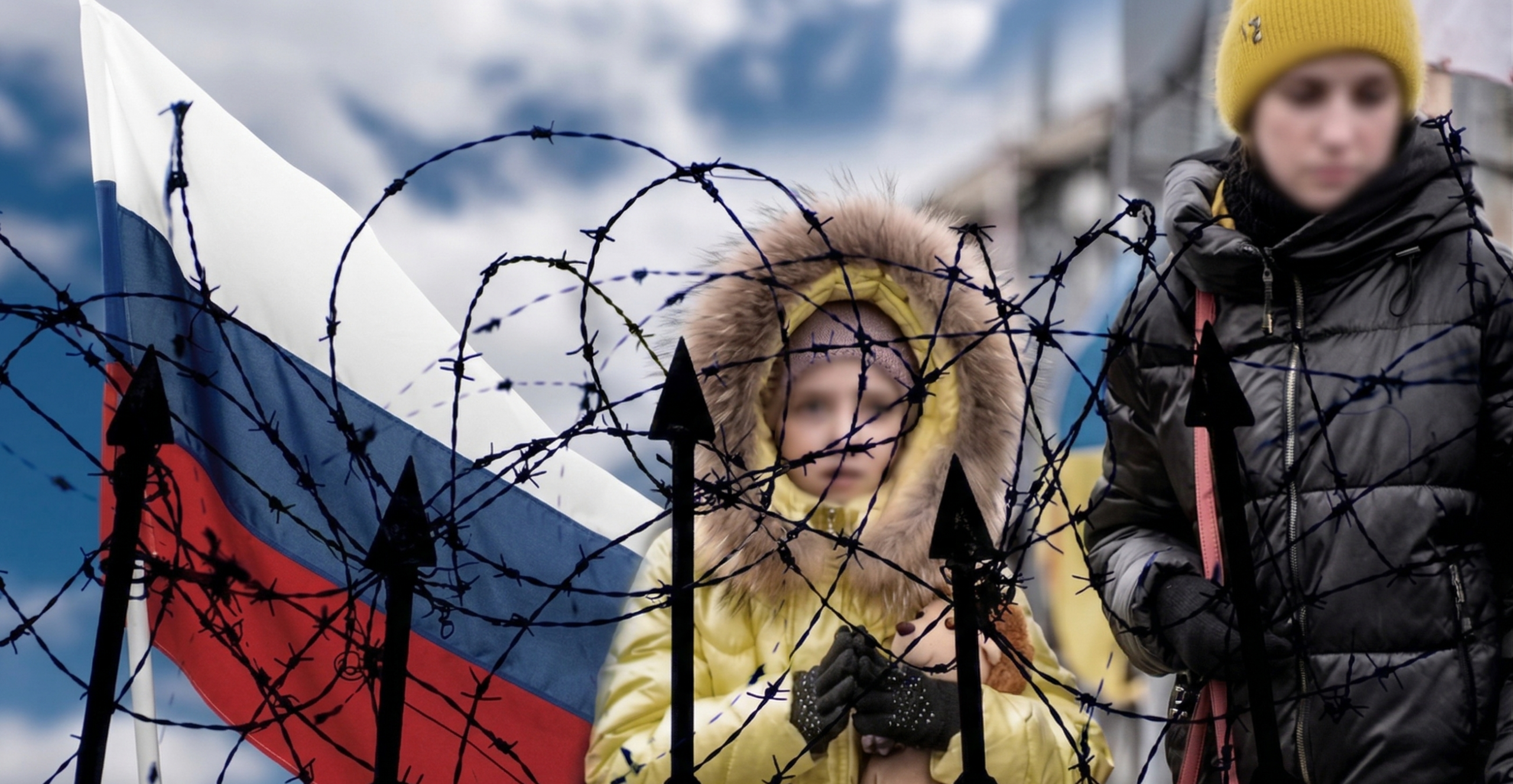
At the center of this system are two of Russia’s largest state-affiliated energy corporations: Gazprom and Rosneft. According to Yale’s analysis, these entities, through subsidiaries and affiliated trade unions, facilitated the transport and/or pro-Russia re-education of at least 2,158 children from occupied Ukrainian territories between 2022 and 2025.
This conclusion reframes the issue. What has often been discussed in humanitarian terms must now also be understood in structural and institutional terms.
Why This Report Matters Now
This report arrives at a moment when international attention risks dilution, while the mechanisms of harm continue to adapt and expand.
For the first time, a credible and independently verified analysis establishes a direct connection between large state-affiliated corporate actors and the systematic transfer and re-education of children from occupied Ukrainian territories. This is not a marginal finding. It transforms the issue from a humanitarian concern into a question of systemic accountability.
It also exposes a significant policy gap. The report identifies 44 entities involved in these activities, of which approximately 80% are not currently under U.S. or European sanctions. This disparity between evidence and response raises urgent questions about the effectiveness and scope of existing accountability mechanisms.
At the same time, Ukrainian children continue to face sustained, layered threats: displacement, disruption of education, and prolonged psychological stress. The systems described in this report operate within that broader context of vulnerability.
This is why the issue cannot be treated as episodic. It requires sustained attention, coordinated policy response, and continued public visibility.

A System, Not an Exception
The report identifies at least six camps in Russia and occupied Crimea where Ukrainian children were taken: Prometheus, Signal, Kubanskaya Niva, Art-Quest, Sputnik, and the A.V. Kazakevich Children’s Health Camp. Three of these camps were owned by Gazprom subsidiaries at the time children from Ukraine were present.
These facilities were not isolated environments. They were part of a broader system supported by corporate funding, voucher programs, logistical coordination, and institutional partnerships. Gazprom and Rosneft-linked entities facilitated transfers, subsidized participation, and, in some cases, directly managed the infrastructure where children were placed.
The reported figure of 2,158 children is explicitly described by Yale as a conservative baseline. Additional documented vouchers—over 1,000 issued in 2022–2023—suggest that the total number of affected children may be significantly higher, potentially exceeding 3,000.
This reinforces a key point: the scale of the issue is not fully captured by confirmed figures alone.
Beyond Movement: Identity and Re-Education
The significance of these transfers lies not only in the physical relocation of children, but in the environment to which they were taken.
Yale defines re-education in this context as the promotion of narratives aligned with Russian state interests, while minimizing or erasing Ukrainian language, history, and identity. Documented activities include so-called “patriotic education initiatives,” structured programming, and exposure to pro-government messaging and actors.
In some instances, children participated in activities that included militarized elements or engagement with state-affiliated figures and media ecosystems. While the full extent of these practices continues to be investigated, the available evidence indicates that these environments were not neutral.
This raises fundamental concerns about the preservation of identity, autonomy, and long-term psychological well-being.
Beyond Movement: Identity and Re-Education
The significance of these transfers lies not only in the physical relocation of children, but in the environment to which they were taken.
Yale defines re-education in this context as the promotion of narratives aligned with Russian state interests, while minimizing or erasing Ukrainian language, history, and identity. Documented activities include so-called “patriotic education initiatives,” structured programming, and exposure to pro-government messaging and actors.
In some instances, children participated in activities that included militarized elements or engagement with state-affiliated figures and media ecosystems. While the full extent of these practices continues to be investigated, the available evidence indicates that these environments were not neutral.
This raises fundamental concerns about the preservation of identity, autonomy, and long-term psychological well-being.
The Broader Humanitarian Context
These findings do not exist in isolation. They are part of a wider pattern of impact on Ukrainian children since the start of the full-scale invasion.
More than 3,200 children have been killed or injured. Nearly 2.6 million remain displaced. Over 1,700 schools have been damaged or destroyed, limiting access to stable, in-person education.
This context is essential. Children who are already experiencing instability, displacement, and trauma are particularly vulnerable to additional forms of coercion, disruption, and long-term harm.
The systems described in the Yale report operate within—and compound—this reality.
From Documentation to Accountability
Evidence alone does not create change. It enables it.
The significance of this report lies not only in what it reveals, but in what it makes possible: informed policy decisions, targeted accountability measures, and coordinated humanitarian response.
For policymakers, it provides a basis to reassess sanctions frameworks and identify gaps in coverage.
For civil society and investigative actors, it reinforces the need for sustained visibility and continued documentation.
For the broader public, it clarifies that protecting children in conflict requires ongoing engagement—not episodic attention.
In this context, documentation is not the final step. It is the starting point for action.
Implications for Child Protection and International Response
The findings presented in this report expand the understanding of how modern conflict impacts children.
Protection is not limited to shielding civilians from immediate physical harm. It also includes safeguarding identity, preventing forced assimilation, and ensuring that children are not integrated into systems designed to reshape their worldview under conditions of coercion or dependency.
The report also highlights the intersection between economic structures and humanitarian outcomes. Corporate entities with significant financial and political influence are shown to play a role in enabling activities that affect children directly.
This intersection introduces a new layer of responsibility for international actors—particularly where economic engagement, sanctions policy, and humanitarian protection overlap.
Conclusion: Sustained Attention as a Form of Protection
The findings of the Yale Humanitarian Research Lab present a clear and evidence-based picture of a system that extends beyond individual cases. It is structured, resourced, and integrated into broader state-aligned mechanisms.
At the same time, significant gaps remain—in accountability, in policy response, and in public awareness.
Children are not instruments of war. They are not assets to be relocated, reprogrammed, or absorbed into systems of political or ideological influence.
Sustained attention to this issue is not optional. It is a necessary condition for effective protection.
The responsibility now lies in ensuring that evidence leads to action—and that the systems identified are addressed with the seriousness they require.
Source:
This article is based on a report by the Yale School of Public Health’s Humanitarian Research Lab. Access full report.
Make the sound of life louder.
Follow and share to help protect children in Ukraine.